chinese americans
Student work • Minneapolis 2026
 Lone Fir Cemetery's Chinese memorial in Portland, Oregon, is expected to finish construction in 2027 after years of organizing from the Asian community.
Published June 26, 2026
 Charlie Bloomer
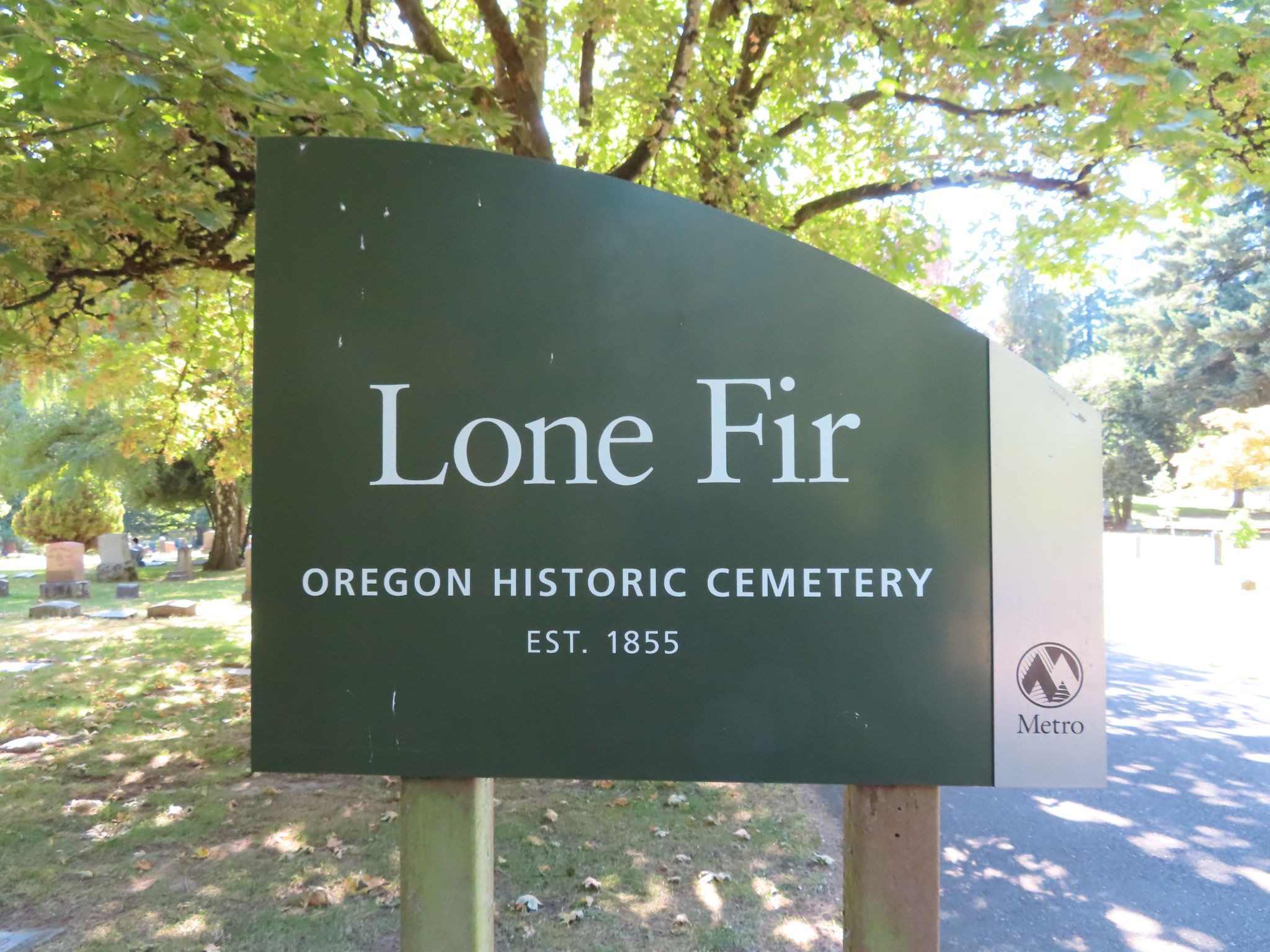
Lone Fir Cemetery in Portland, Oregon in 2026. (Charlie Bloomer)
In Portland, Oregon, artist Sophia Xiao-fan Austrins and an elderly community member roll small pieces of clay, forming grains of rice. One by one, they create a sculpture of a rice bowl— a widely regarded symbol of abundance and prosperity in Chinese cultures.
The bowl will go on display alongside over 90 other clay pieces of work at the Chinese memorial at Lone Fir Cemetery, which is set to finish construction in 2027. The clay sculptures are part of a public art project by artists Qi You and Austrins.
The memorial commemorates the local Chinese community after Multnomah County bulldozed over Chinese graves at the cemetery in 1948. The plot known as Block 14 was paved over to construct a maintenance building for the county. Members of the Asian Portland community say the memorial represents more than just an apology: It creates visibility for a once-neglected demographic.
Austrins and You’s public art navigates the heaviness of the topic by inviting people to create their own art pieces.
“We wanted to take this opportunity to heal and bring out people’s voices,” You said. “Trying to empower the everyday Chinese Oregonian who cares about this piece of history.”
Established in 1846, Lone Fir Cemetery is the final resting place for over 25,000 people in Southeast Portland. The 30-acre cemetery has a long history of erasure against the Chinese community— a past that remained relatively unknown and undocumented for decades.
Block 14 was known as the Chinese section, where mutual aid organizations such as the Consolidated Chinese Benevolent Association would oversee burials with traditional rituals — including shipping bodies back to China.
It’s estimated over 3,000 Chinese Portlanders were buried in Block 14 until the early 1920s, according to Metro, the regional government in greater Portland. Many people weren’t recorded by name in official ledgers — they were instead identified only by race, using a term today recognized as a slur.
In 1928, the land was sold from a private owner to Multnomah County. Twenty years later, an estimated 265 Chinese Americans were exhumed by the county, ignoring traditional practices, shipping some remains to China and reburying others elsewhere in the cemetery.
In 1953, the remainder of the area was bulldozed and paved over to construct the Morrison building, which operated for the county’s transportation division.
However, people were not aware of this history until 2004, when Rebecca Liu from the Chinese Consolidated Benevolent Association stumbled upon ledgers full of Chinese names from the cemetery in the basement of CCBA .
“People must have known about it before, but they’ve all passed on,” Helen Ying, the Vice president of the Chinese American Citizens Alliance Program Lodge and president of the Lone Fir Cemetery Foundation, said. “No one has passed on this information within the Chinese community, and so it came to light.”
In 2005, a year after Liu’s findings, the Morrison building was demolished and eventually the property was deeded to Metro.
Yet there’s more to the story than what was originally told to the Chinese American community.
Metro’s research uncovered other key details that may have been lost for decades. For example, original press releases from 2023 alleged numbers of buried Chinese people to be around 2,900s; February 2026 articles from Metro showed that estimate to be above 3,100.
The Lone Fir Cemetery Association, among other organizations, spent a decade advocating for an official memorial. In 2007, a group from the Lone Fir Cemetery Association came up with the idea to plant a garden at the burial site as a memorial.
“A memorial tells a story. It helps community members grieve and heal,” said Duncan Hwang, a member of Metro’s council. “It tells a story of the past, the invisibilization of communities. They literally paved it over and put a building on it.”
Over the years, Ying and many others testified at county commissioner meetings for a formal apology from the county and budget allocations for the memorial.
“It’s amazing how things kind of aligned,” Ying said. “The voices of the Chinese community came together in the designing of this memorial. It’s not just apologizing in words; apologizing in action as well.”
A formal apology was unanimously passed from the Multnomah County Board of Commissioners in June 2025. The memorial is being designed with “extensive input” from organizations including the Chinese American Citizens Alliance, Portland Lodge, Lone Fir Cemetery Foundation and Oregon Chinese Consolidated Benevolent Association, according to Metro.
“As a community member, I think it’s great that both processes for the landscape architect and for the public artists have been engaging the public’s input,” said Roberta Wong, a Chinese American artist who was born and raised in Portland.
“People are going to appreciate the effort behind it,” she added, “and I think it will enhance Portlanders’ knowledge and understanding of the Chinese American experience and maybe bridge or create some sort of healing process.”
Wong had attended community forum events to gather feedback. The lead designer of the project is creating vertical nameplants which will honor the names of Chinese Americans found in CCBA’s book, she said.
Hongcheng Zhao, president of the Oregon Chinese Coalition, noted the social progress in Portland in recent decades. While there is “discrimination for sure,” he said a lot has changed in Oregon since he first arrived in the ‘90s.
“Where to go from here? There’s a Chinese saying: ‘刻舟求剑 (kè zhōu qiú jiàn),’” Zhao said. It’s a metaphor for refusing to change old ways in light of shifting circumstances.
Zhao keeps this metaphor in mind as a reminder to keep pressing forward.
“Where we are, where we live today, the environment has also changed,” Zhao said. “That’s a dark age of history, but that one memory doesn’t affect us in terms of what we do today.”
The memorial can be a vehicle for people to adapt to the changing times while recognizing harm done.
“That’s the crux of justice work in general,” Austrins said. “That we are actually understanding the past, looking for any root issues that are still lingering, and being able to address those to try to create a more whole future.”
For You, being a part of Block 14 work made her notice all the Chinese Oregonians around her in restaurants and grocery stores. She said the art project helps her slow down in day-to-day moments and pay attention to strangers who have different stories to tell.
“Sometimes we honor the history or the past but at the same time forget the present,” You said. “Here’s that hope… if we are willing to learn and we’re also part of the social change.”
Despite being known as the whitest city in America, Chinese Americans have always been a part of Portland, Hwang said.
“It’s important in this time to tell those stories and humanize your neighbors,” Hwang said. “And remind folks that communities have been here for centuries and have helped build the social fabric of what we have now.”
The memorial helps restore the place of Chinese residents in Portland’s history.
“It’s making visible parts of the practice of culture that were erased,” Austrins said. “For the future generations of the Chinese community to be familiar with the culture and have a sense of place.”
Barnard
2026 VOICES Fellow
Minneapolis 2026




Apply
Become a fellow or editor
Donate
Support our impact
Partner
Work with us as a brand

The Asian American Journalists Association (AAJA) is a membership nonprofit advancing diversity in newsrooms and ensuring fair and accurate coverage of communities of color. AAJA has more than 1,500 members across the United States and Asia.
