Mongolian Americans
Student work • Minneapolis 2026
 Zola Ganzorigt has become one of the industry’s most recognizable nail artists, from the red carpet to Vogue.
Published June 26, 2026
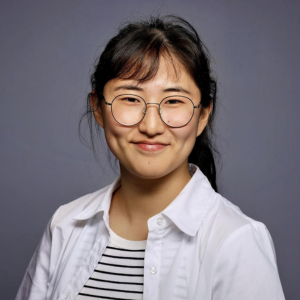
 Indra Dalaisaikhan

Nail artist meticulously applying nail polish in a beauty salon environment (Courtesy of Maxi Leiva/Pexels)
Zola Ganzorigt’s phone wouldn’t stop buzzing. When she left her job at a nail salon in 2018, clients flooded her with text messages asking where she’d gone and if she could still book appointments.
One of them was Sabrina Carpenter.
At the time, Ganzorigt was living in Manhattan Beach, California, 40 minutes away from the salon she had just left. Then she had an idea that changed the trajectory of her career: house calls.
“At that time, house calls weren’t a regular service,” she said, but it would save her high-profile clients from having to drive or being recognized by fans or paparazzi.
Since then, Ganzorigt has become one of the industry’s most recognizable nail artists with clientele including Hailey Bieber, South Korean singer Jennie and Adele. After signing with The Wall Group, a leading agency for fashion and beauty talent, in 2020, she continued to do house calls while flying across the country for editorial photoshoots with Vogue and events like the Met Gala.
Ganzorigt is part of an emerging group of Mongolian Americans in the United States, largely invisible until recently. According to the U.S. Census Bureau’s American Community Survey, the group’s population has nearly doubled in less than a decade, from 15,919 in 2015 to 27,395 in 2024. Many rely on community networks that connect newly arrived immigrants with jobs in nail salons and trucking, according to interviews with Mongolian business owners and workers.
Born in Erdenet, a small city in Mongolia, Ganzorigt said nail art began as a hobby. In 2012, while working as a risk analyst at a bank in Mongolia, she came to work each week with a new set of nail designs she had painted in her room.
“I never thought I could make a living by doing nails. It was never a thing, especially in Mongolia,” Ganzorigt said. “It never crossed my mind.”
Ganzorigt moved to Koreatown in 2016 to pursue a master’s in business in Los Angeles. Her cousin, already living there, prepared Ganzorigt’s apartment in Koreatown and offered her a part-time job at a nail salon to support herself while she studied.
Nail salons, an industry historically dominated by Vietnamese Americans, were a way for refugees to find financial independence in a country where they had no footing. It also attracted many Asian immigrants because it didn’t require English fluency.
Oyunzaya Dash, a small nail salon owner in the Chicagoland area, said that if she had to estimate, she would say “80-something percent” of Mongolian American women in the city work in nail salons.
Mongolian Americans often help one another find their footing when they migrate, Dash added, including connecting them with jobs in Mongolian businesses like nail salons.
“It’s actually (a) very detailed, skilled job… It’s not an easy job, but I think Mongolian people are very strong. Very patient to learn, very patient to working,” Dash said.
Mindy, a nail salon worker in the Chicagoland area who communicated with VOICES in Mongolian, said the work takes a toll on her body.
“It’s not a job where you’re running around. You’re sitting most of the time. But you’re not sitting straight, you’re bending your back sideways, forward and backwards working on people’s nails,” said Mindy, who declined to share her real name for fear of safety.
Workers massage clients, paint nails and clean working stations, relying on arm and finger strength during long hours of work, Mindy said as she tried to loosen the muscles in her hands and shoulders.
Ganzorigt said working in a nail salon was also a transition mentally, since it was the first time she had painted nails on other people. She recalled taking longer than she hoped for on her first appointment, but seeing her customer’s reaction made her understand this was a career she wanted to pursue.
“Poor girl was so sweet, she was like, ‘Oh my God, my nails are so pretty. Thank you so much.’ And it was like such a relief because when you’re taking your first client, it’s so much pressure,” Ganzorigt said.
Ganzorigt told VOICES that working at a salon also rapidly improved her English beyond the limited level taught in Mongolian high schools, and she asked her customers about American cultural norms, too.
“’I’ll be like, ‘What is this holiday for? Why do you celebrate it? Why is the bunny related to Easter?’ I would ask the stupidest things, like the (questions) kids would ask,” Ganzorigt said.
In 2020, Ganzorigt graduated from Sierra States University with a master’s and faced a decision: go back to finance or work full-time in nail art.
“(My parents) were so proud of me doing my master’s in America, and they were just expecting me to have a corporate job. (That’s) a big success in Mongolia,” Ganzorigt said.
Realizing that painting nails brought her more joy and fulfillment than working in corporate, Ganzorigt chose the former despite her father’s efforts to convince her otherwise.
In 2022, the “glazed donut” nails she created for Hailey Bieber’s Met Gala look went viral, becoming one of the year’s defining beauty trends, according to Cosmopolitan.
Four years later, that moment helped her launch a glazed donut-inspired collection with OPI, the first time the brand had ever collaborated with a nail artist on a line.
Ganzorigt embodies a lot of “firsts,” including for her clients.
“All of my clients didn’t know about Mongolia until they met me, so it’s like I’m presenting the entire country,” Ganzorigt said.
Whether chatting with Kendall Jenner, a known “horsegirl,” about Mongolian horses or revealing she’s Mongolian to Jennie and her team after they assumed she was Korean, Ganzorigt said she feels proud whenever she talks about her home country.
However, Ganzorigt’s success is an exception within the workforce. For many Mongolian Americans, nail salon work is not only tied to long hours and physical strain, but also to uncertainties surrounding immigration status.
In Chicago, Dash has turned her living room into a temporary landing place, helping Mongolian families file immigration papers and even lending her ill-fitting white dress to a couple getting married at a courthouse.
About half of Mongolian immigrants identify as non-U.S. citizens, according to the 2024 American Community Survey. In September 2025, the Trump administration escalated its crackdown on sanctuary cities and launched Immigration and Customs Enforcement’s (ICE) Operation Midway Blitz in Chicago, unsettling Mongolian businesses.
Dash was not directly affected because she is a U.S. citizen. Still, her business was impacted after one of her nail stylists quit and returned to Mongolia due to her immigration status.
Since then, Dash has worked without a day off for three and a half months to make up for the loss.
For some, the fear was immediate. Mindy said she avoided leaving her home, anxious about being stopped at the grocery store or on the road by ICE agents. She constantly checked the news before going outside, asking friends to translate articles about new immigration policies to stay updated.
“I really thought this was no longer America,” Mindy said.
She had applied for permanent residency but feared advancing to the next stage of the process amid recent news about the Trump administration’s policies that could require applicants to return to their home countries to complete their green card applications.
During the height of ICE raids, one of Chicago’s largest Mongolian American Facebook pages, Chicagomongols, served as a platform for community members to warn one another about where agents were by posting photos and videos, according to Dash.
Despite the challenges of building a stable life under a difficult immigration system, Dash is hopeful that the next generation of Mongolian Americans, like her teenage child, will be far more educated and secure than their parents.
Bolormaa Bella Jamiyansuren, a first-generation Mongolian American, founded the Dayan Academy for that purpose. She said the organization prepares Mongolian American children for spelling bees but also helps them enter workplaces where they can build Mongolian networks and pull each other up — something she said she saw her Indian colleagues do for one another.
According to Jamiyansuren, an estimated 70% to 80% of her students’ parents are undocumented and often work in nail salons or trucking, making it difficult to travel with children for out-of-state or international competitions. When Real ID requirements prevented some parents from traveling with their driver’s license, families turned to one another.
One mom recently drove six other kids to a competition alongside her own two children, Jamiyansuren said, adding: “We literally community-solve problems.”
Community remains important for Ganzorigt, too. She said she hasn’t been able to go back to Mongolia since 2016, flying out for clients and booking house calls often. But she’s still able to find connection and inspiration.
“Some people will tell me, ‘Oh my God, because I saw you, I want to be a nail artist,’ like little Mongolian girls would DM me that, and it just really fills my heart,” Ganzorigt said.
Northwestern
2026 VOICES Fellow
Minneapolis 2026





Apply
Become a fellow or editor
Donate
Support our impact
Partner
Work with us as a brand
The Asian American Journalists Association (AAJA) is a membership nonprofit advancing diversity in newsrooms and ensuring fair and accurate coverage of communities of color. AAJA has more than 1,500 members across the United States and Asia.
